Rankings are based on each brand's overall disclosure score — a measure of how much ingredient, testing, and value information is publicly available. No sponsored placements. No affiliate weighting. Read the full methodology →
Buying Chaga in a Adaptogen Blend: what the research says
Chaga (Inonotus obliquus) is a parasitic fungus that grows on birch trees and is used primarily for its antioxidant capacity and immune-modulating properties. Unlike cultivated mushrooms, wild-harvested Chaga has significantly higher levels of betulinic acid (derived from birch bark) and a distinctive ORAC (antioxidant) score. The majority of Chaga research is preclinical — conducted in cell models and animals — with limited human trials to date. What exists supports antioxidant and immune-marker activity, but dose recommendations for humans are largely extrapolated. The quality of Chaga products varies significantly based on harvest source (wild birch-grown vs. cultivated), extraction method (water, alcohol, or dual extraction), and whether the indigestible chitin cell wall has been properly broken down.
What to look for
- 1.Wild-harvested Chaga from birch trees — cultivated forms lack betulinic acid
- 2.Dual extraction (water + alcohol) to capture both beta-glucans and antioxidant triterpenes
- 3.Third-party COA confirming no heavy metals — Chaga is a bioaccumulator and can concentrate soil contaminants
What matters in an adaptogen blend
- 01Per-ingredient dosing: the biggest risk with blends is spreading the dose too thin. A product with 8 adaptogens in a 600 mg blend delivers ~75 mg per ingredient — a fraction of the 300–600 mg needed for ashwagandha or 500 mg for lion's mane to meet clinical thresholds.
- 02Proprietary blend transparency: a proprietary blend that lists ingredients without individual amounts makes it impossible to assess whether any ingredient is at a clinical dose. Transparent brands list exact amounts; this is the clearest indicator of quality intent.
- 03Extract standardisation: blends that specify "KSM-66 Ashwagandha" or "Rhodiola SHR-5" are using clinically validated extracts with declared active percentages — a significant quality signal over generic "root extract" listings.
#1Top Pick
6.1/10
β-glucan 750mgper serving £0.64blend
#2
Adaptogen Blend
Matcha DustSpacegoods
Claims: Focus, Energy, Stress, Immune
3.8/10
⚠Limited Disclosure
Spacegoods has not publicly disclosed the key information needed to assess whether this product supports these goals.
per serving £1.30fruiting body
#3
Adaptogen Blend
Rainbow DustSpacegoods
Claims: Focus, Energy, Stress, Immune
3.8/10
⚠Limited Disclosure
Spacegoods has not publicly disclosed the key information needed to assess whether this product supports these goals.
per serving £1.30fruiting body
#4
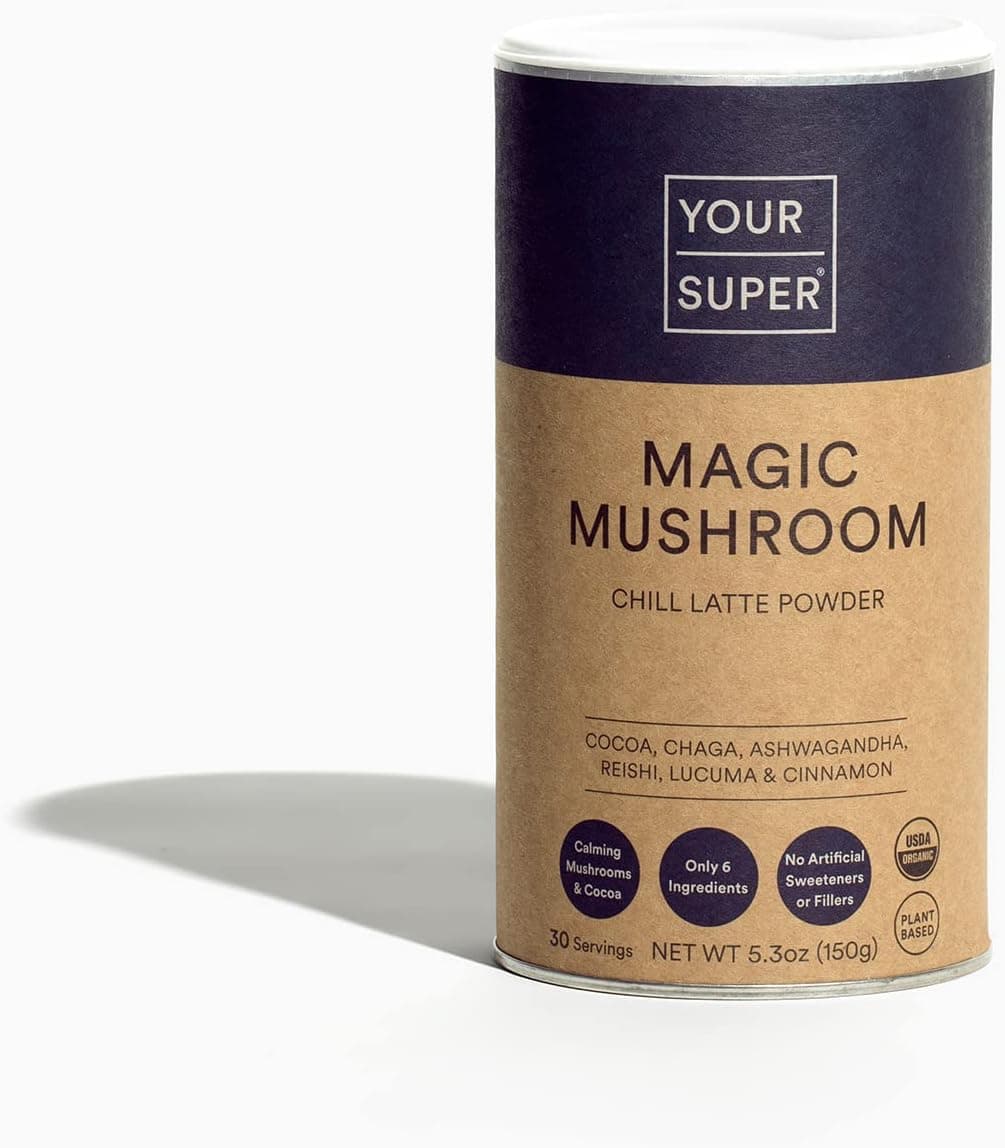
3.4/10
⚠Limited Disclosure
Your Super has not publicly disclosed the key information needed to assess whether this product supports these goals.
per serving £1.00fruiting body
#5
3.4/10
⚠Limited Disclosure
Variety Mode has not publicly disclosed the key information needed to assess whether this product supports these goals.
per serving £1.00fruiting body
#6
2.9/10
?Insufficient Data
SoulBrew has not publicly disclosed the key information needed to assess whether this product supports these goals.
per serving £1.00fruiting body
#7
2.0/10
?Insufficient Data
MudWtr has not publicly disclosed the key information needed to assess whether this product supports these goals.
per serving £1.33unspecified
#8
1.6/10
?Insufficient Data
Tropeaka has not publicly disclosed the key information needed to assess whether this product supports these goals.
per serving £1.75unspecified
Chaga Adaptogen Blend questions answered
Does Chaga need to be extracted to be effective?+
Yes. Chaga's cell wall is made of chitin, which is indigestible by humans. Without extraction (typically hot-water or dual water-alcohol extraction), the active compounds — including beta-glucans and betulinic acid — are largely inaccessible. Dried ground Chaga powder without extraction delivers a fraction of the actives compared to a properly extracted product. Look for products that specify their extraction method and ideally their beta-glucan or betulinic acid content.
Is wild-harvested Chaga better than cultivated?+
For most functional mushrooms, fruiting body extract quality is more important than whether it is wild or cultivated. Chaga is an exception: wild Chaga growing on birch trees contains betulinic acid derived from the birch bark — a compound largely absent in cultivated Chaga grown on alternative substrates. If betulinic acid is a priority for you, look for wild-harvested Chaga from birch sources, and check the product's COA confirms the compound is present.
Information on this platform relates to nutritional composition and public disclosure practices only. It is not medical advice. No claims are made about the therapeutic efficacy, safety, or suitability of any product. Always consult a qualified healthcare professional before taking any supplement.